
The Short Answer
Your garage door is almost certainly the weakest point in your home's exterior walls, and nor'easter season is exactly when that weakness gets tested. A door that isn't properly braced, balanced, and sealed can buckle, pop off its tracks, or blow inward during sustained high wind, and once that happens, the wind pressure inside the garage can push upward on the roof structure itself. The fix isn't complicated: check the bracing, test the auto-reverse, replace worn weatherstripping, and know when a panel or opener needs professional attention before the first big storm hits, not after.
Why the Garage Door Fails Before the Walls Do
A standard exterior wall is a continuous, braced structure. A garage door is a large moving panel held in place by tracks, rollers, hinges, and a spring system, with much less structural redundancy than the wall around it. When wind pressure builds against a house, that pressure has to go somewhere, and a door that flexes or separates from its tracks gives it an opening. Once wind gets into a garage, it pushes outward on walls and upward on the roof from the inside, which is a very different and more damaging load than wind simply hitting a solid wall from outside.
This matters more here than in a lot of places. Much of the housing stock in Boxford and the surrounding towns is older, and older garage doors were often built to lighter wind-load standards than what's manufactured today, if they were engineered for wind load at all. A door installed decades ago may have thinner panels, lighter-gauge tracks, and no reinforcing struts, which is fine in calm weather but becomes a real liability during a nor'easter with sustained gusts.
What This Season Actually Brings
Late fall into winter around here means nor'easters with strong, sustained wind, often paired with heavy wet snow or rain that adds load to the door itself. Add in the freeze-thaw cycle that's typical of this region's winters, and you get a door that's dealing with wind stress on top of ice buildup in tracks, stiff or cracked weatherstripping, and road salt corrosion on hardware. None of those issues show up as dramatically as a door blowing in during a storm, but they're often the quiet cause behind it, since a door that's already struggling to move smoothly has less margin left when wind adds extra force.
Concrete Steps to Take Before the Next Big Storm
1. Check for horizontal struts
Reinforcing struts run horizontally across the back of the door panels and are what actually resist wind pressure. If your door doesn't have them, or only has one near the top, it was likely not built with high wind in mind. Adding struts is a straightforward upgrade compared to replacing the whole door.
2. Inspect the track and roller hardware
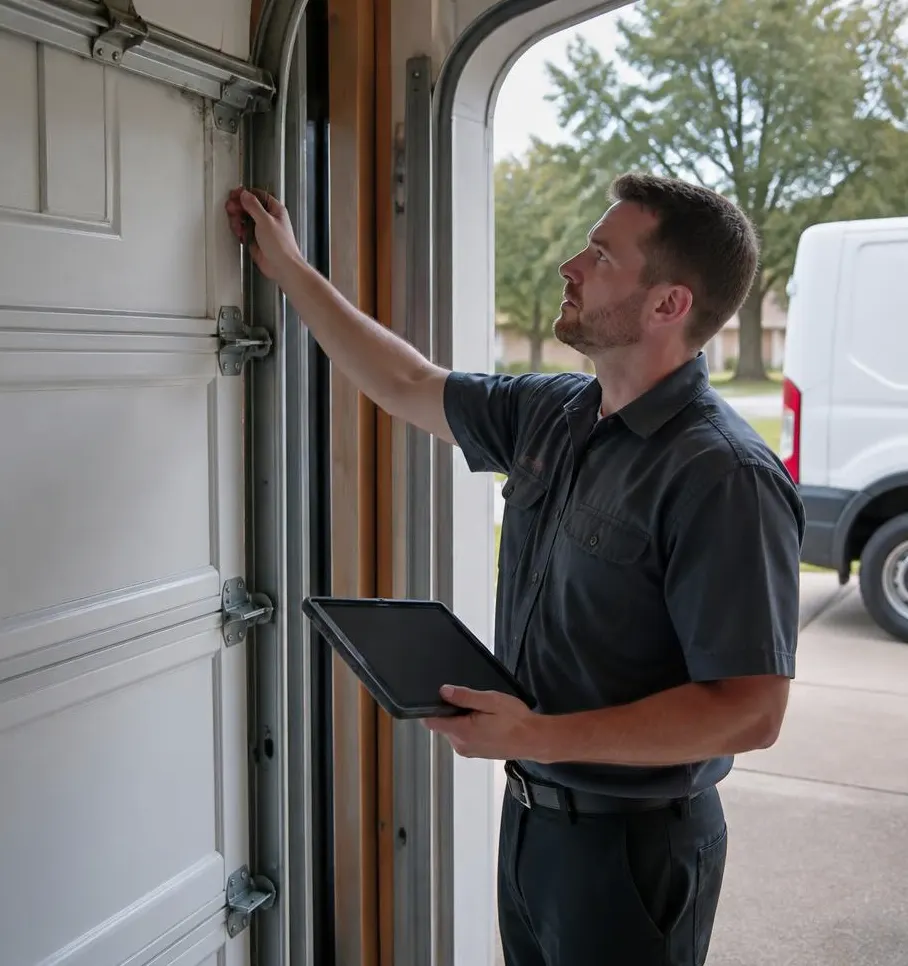
Walk the door through a full open-and-close cycle and watch the tracks. Gaps between the rollers and track, visible rust, or tracks that aren't perfectly plumb all reduce the door's ability to resist lateral wind force. Salt spray from winter road treatment accelerates corrosion on hardware, so this is worth checking every fall, not just when something sounds off.
3. Test the auto-reverse safety feature
Place a 2x4 flat on the ground where the door closes. The door should reverse immediately on contact. This is a safety feature first, but it's also a sign of whether the opener's force settings and alignment are correct, which matters during high wind when the door is working harder than usual to seat properly.
4. Replace cracked or flattened weatherstripping
The rubber seal along the bottom and sides does more than keep out drafts; it's part of what keeps wind-driven rain and snow from forcing their way in around the edges of the panel. Weatherstripping that's cracked, flattened, or pulling away from the track should be replaced before winter, not after you notice water on the garage floor.
5. Make sure the door is properly balanced
Disconnect the opener and lift the door manually about halfway. It should stay in place on its own. A door that drifts up or falls down means the springs are out of balance, which puts uneven stress on the panel and hardware exactly when you need them working together under wind load.
6. Consider battery backup for the opener
Nor'easters regularly knock out power, sometimes for extended stretches. A battery backup on the opener means you're not stuck trying to manually operate a door in freezing wind and sideways snow, which is both a hassle and a safety risk.
When It's Time to Call Boxford Garage Door
If you've checked the door and found missing struts, a track that's visibly bent or pulling away from the wall, a door that won't hold its position when lifted manually, or weatherstripping that's beyond patching, it's time for a professional look rather than a DIY fix. Boxford Garage Door handles both garage door maintenance and tune-up visits to catch these issues early, and garage door spring replacement when a door's balance is off enough that it's unsafe to keep operating. We'll check the hardware for corrosion, confirm the door has adequate wind bracing for an older structure, and make sure the opener's safety settings are dialed in before the next storm rolls through. If something fails mid-storm, our emergency garage door service covers Boxford, Topsfield, Georgetown, Middleton, North Andover, Rowley, Ipswich, and Haverhill.
Don't wait for a nor'easter to find out your garage door isn't ready for it. Call Boxford Garage Door today to schedule a storm-readiness check for your Boxford, MA home.